Saturday Aug 29, 2020 NYC
Editor’s Note: Pranavadipa Volume 69
During this time of great change in our lives and in our world, perhaps the opportunity to face questions pertaining to our very existence may be urgently knocking at our door. The Satsangha in this month’s issue of Pranavadipa (Vol. 69) is incredibly rich, the content being gathered from parts of the question and answer that happened during various Satsangha taking place over the course of several consecutive weeks in 2012, all falling under the theme of the main title, “Confronting ‘Life’ and ‘Death.’” The content probably relates to one of the closest matters that all human beings have in common, as without life there is no death, and without death, there is no life; such matters relate directly to how we want to live our lives; and this is very closely related to the sense of “I”.
Life and Death—some people may think of these as philosophical matters. But, is it really so? If we think about it seriously and objectively, we come to realize that these relate to everything we do and think, whether we are aware of it or not—and this is quite universal.
Satsangha begins with a question from a first-time attendee; her daughter, when down, asks her, “What are we living for?” So, she asked Shri Mahayogi for advice on how to answer her. Shri Mahayogi responded:
“Indeed, all of humanity living on this earth is facing a similar issue. The Yoga that began in ancient times has also tried to answer that question. What are we living for, and who is living—“I am living” may be how you answer that. Then, what is that “I”? Who am “I”? Being born, growing up, then going through various studies, jobs, and making a living, then dying. What is the meaning of all of this? After all, the answer cannot come unless you ultimately come to know who you are.
The answer that Yoga found, which is actually related to this conversation I just mentioned, is that the essence—“I”—is neither the body nor the mind, it is the Soul that exists deeper within. And Yoga teaches through experience that this Soul is the Eternal Existence; and that the Soul of the person who experiences this and the soul of others, or the substance that is abiding as the essence of the entire universe, do not differ one iota and are exactly the same. It is the One without a second. It is merely this Eternal Existence that is repeating being born and dying again and again within the limited realm of space and time. By knowing the true substance, you will become unentangled in things like ephemeral joy and pain, or the sadness that arises from the experiences in the world. These are just like inevitable conditions that refer to the world, so you just have to deal with them accordingly.
What’s more important is to know that even though it is within this limited time frame, the brilliance of this Existence—this sacred Life—is within everyone and you yourself are That. By knowing that, if you come to know the most important thing for yourself, then you will no longer be entangled so much in other things, meaning the experiences of this world. Realizing that is Satori (Awakening), and [that Truth] is the very essence of everyone. [It is important to] tell your own mind this, since the mind does not know it. For that is the only absolute salvation.
The teaching of Yoga is the universal Truth, so I am sure that if your daughter hears it or reads about it a little, she will be able to find the answers there; when she is having doubts like that, then she must be seeking, therefore it is a good opportunity [to open herself to find a real answer].”
At another point in the Satsangha, a long-time practitioner asks: “Shri Mahayogi tells us to discriminate on death and to make death the object of meditation. I deduce that we ourselves are not clear how we want to live our own lives, perhaps because of not thinking thoroughly about death. Is it indeed necessary to think about death? Or, is it enough to just simply and steadily concentrate on Yoga?”
Then Shri Mahayogi started to answer:
“Within the process of concentrating on Yoga, over time, there comes an inevitable point in which one must conquer death. Why?—because a large part of the attachments that occupy the depths of the mind are resting upon death. In order to make progress in Yoga, you cannot avoid eradicating the sanskara of the fear of death. Conversely, simply and precisely because we were born, ignorance, pain-bearing obstacles, and various attachments, including the fear of death arise. Despite this fact, humans forget that they were born, and are deluded into or fancy living in their own physical body forever. This is the huge illusion of ignorance. That is exactly why you meditate on death and conquer and transcend it; and through that you will transcend the mind itself.”
Then he continues on about meditation on death in Yoga, and at one point speaks:
“Concentration and meditation [on death] are like putting death itself on top of an operating table—this concentration, this meditation, is, so to speak, like being a surgeon! It is extremely scientific, medical, philosophical, and psychological. You must not bring your preconceived notions! Truly, you put death itself on the operating table, dissect it, and find out what’s in there! It is a scientific task of discerning it. There are, as mentioned now too, conceptual thoughts, medical concepts, philosophical, psychological, and various elements that are vaguely creating the image of death. You must dissect each and every one of them, discriminate and make them completely naked! Meditation is like anatomy, so to say. You must thoroughly perform it, so much so that it is like that!”
Shri Mahayogi also spoke, answering a question, about his own inquiry into death—the thought that initiated him to experience it and enter into Nirvikalpa Samadhi at the age of 8.
Shri Mahayogi’s teachings, through answering the questions that come from the more advanced or long-time practitioners to those who are beginners, speak to all of our hearts. His way of guiding us is very clear and powerful, yet it is always enveloped in serenity. It is quite lively, quite spirited—absolutely FREE!!! It most definitely does not come from the kind of explanation one would receive from a scholar, it is of a completely different quality—Shri Mahayogi is not theoretically explaining when he answers, he is speaking the facts, which are purely coming from a type of knowing that is in a completely different category from that of intellectual knowledge, and rather it is the knowing coming from directly experiencing the Truth. We can clearly feel this from his presence and his words. From that state of Truth, from the realm of Fact that is beyond time and space, he speaks, explains, and guides us towards It, telling us again and again that we are all That and we must realize That—the entirety of our inner Self, the true Self, is the brilliance of this Existence—this sacred Life!
Shri Mahayogi does not give lectures, nor does he prepare any material to speak, he simply answers questions because we ask him. It is always simply that, he just answers from the state of Truth—his wisdom is unfathomable! But are his words what matter most? His presence itself is the immeasurable blessing and most tangible teaching for us to be guided towards returning to our origin!
But because we ask, he answers. And he answers for the sole purpose of us returning to our original Self, the true Self.
He explains the fact of why we can’t see It, and that for us to be able to see It, the work we need to do is to remove the obstacles that we ourselves have created on our own that block it. Thus, he explains the way to remove the obstacles, the block, is through the practice of discrimination between the Truth and the thoughts that arise in our minds over and over. Shri Mahayogi says:
“Deepen meditation. In order to do that, what is crucial is to purify the mind—to purify means to eradicate pain-bearing obstacles and ignorance. The biggest power for that is indeed, FAITH. Pure faith will bring you the power to proceed with leaps and bounds. And then you yourself awaken to the Truth that is within you. That is the supreme directive of Yoga.”
Shri Mahayogi also explains that “what the yogi practice is nivritti, a backtracking, or going against the flow.” It is quite fascinating that this nivritti, or “going against” the natural flow of outward development and manifestation that takes place in the world, is precisely what envelops us in an illusion that we believe to be real. It is this “going against” in all aspects that is at the heart of the discrimination that Shri Mahayogi is teaching in this Satsangha. We should put to the test everything we know and believe about what this life is and who we are, including the very content of what death itself is.
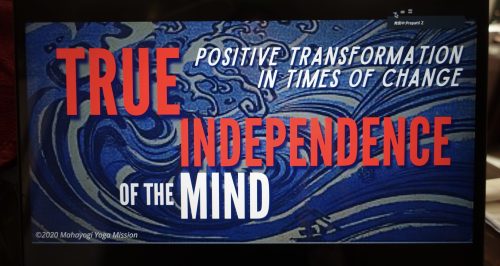
Although “facing death” is an important content in the process of discrimination and emphasized in the Satsangha of this Pranavadipa (Vol. 69), Shri Mahayogi also teaches about many other aspects of discrimination, including about where the passion that one needs to thoroughly discriminate comes from, how this differs in jnana yoga and in bhakti yoga, how to approach discrimination in regards to the results one may receive from various actions, the importance of correcting oneself according to the teaching of Truth again and again, and the True Independence that is reached at the end of thoroughgoing discrimination.
The content of Satsangha is filled with many clues as to how we can actually use the teachings and practices of Yoga to transform our mind. Shri Mahayogi always says that Yoga should be practical. It is not something to just think about once and think that we have understood. Rather, what we are being offered in Satsangha is how we can apply the practice of Yoga into every moment of our lives, examining and transforming our foundational views, and concretely bringing them to align with the Truth.
Once again we are amazed with Shri Mahayogi’s manner of teaching and the profound depth of his understanding that we are only still reaching out to try to grasp.
*
This month’s Testimony contains the final part, Part 3, of the articles written by Shri Mahayogi’s disciple, Yukti, that we have been publishing over the course of the last two issues of Pranavadipa (Vol. 67 and 68): Living on the Words of Mother. Where has her search for the understanding and the bringing to life of the words of Mother Teresa—“Be Holy”—reached?
As she concretely pursued this search coming from her thirst to understand the meaning of the words of Mother in Parts 1 and 2, she continued her journey by continuing to study the words and life of Mother Teresa, what it all meant, and how she could try to act upon it herself, in whatever way she could that would make sense for her own life circumstances.
Yukti ended up making the decision to work as a nurse once again and move to Fukushima, where she was striving to work on the aftermath of the March 11th Tofoku Earthquake and Tsunami that hit in 2011. This was two years after she went to India in search of the answer for “how the dying can best be served,” which she found upon her return from India in the words of Mother Teresa—“Be Holy.”
Part 3 begins with Yukti’s pursuit to know more about Mother’s words, and her striving to understand their meaning as much as possible before moving to Fukushima. At that time, she came across these words in a letter that Mother Teresa wrote to her sisters and brothers the day she passed: “Be only all for Jesus through Mary.” Yukti’s desire to know why this seemed to be of the utmost importance to Mother made her strive to know who Mary was, which then led her to begin to understand what the meaning of surrender is, and finally led her to come to realize the following:
“After all, the only thing of all the things that we can do, is to make an effort to make our own minds more pure… Before, I was so eagerly striving to see God in the people in front of me. I wanted to see God. I convinced myself that if I could see God in everything, the way I lived would change. However, on the contrary, that mind that was desiring so eagerly to see God in some way, made me go far away from loving the person in front of me. And I had overlooked how their words, gestures or expressions were trying to appeal to me. The fact and the Truth is that God is within everybody, whether I can see It or not. What I must do is only one thing—to get rid of my own thoughts, empty my mind, and continue to act, bringing the mind to the God in front of me. That is the way to purify ourselves and that is the meaning of purifying our mind and actions—to become such that you belong to God. I realized that there was nothing left for me to do but to aim for that.”
Her words are very simple yet very powerful, because they come from her own realization, reached by going through all the journey she went through up until then.
Yukti’s pursuit then continued on to who Jesus was and what qualities Mary must have had to make Mother want us to use Mary as a way to go closer to Jesus, as well as how all of this might relate to what she has learned about in Yoga through her great Master, Shri Mahayogi. Yukti’s articles end with her determining how she wants to live her life, just before moving to Fukushima.
Truly, Yukti’s story is so inspiring in many ways. And it is truly a testimony of why Shri Mahayogi suggests us to meditate on the life of a Saint. Because of her thirst, which is something that Shri Mahayogi mentions during Satsangha in one way or another, is so real and strong, thus, her aim and ideal are very clear and are reflected in the course of her actions. Through the account of what her experiences demonstrate, we can learn the tools that we too can use in order to strive towards our own aim and our own ideal. In her own way, Yukti was filling her mind with her aim and her ideal, she was filling her mind with Truth, and as she tried to learn, to understand and to live accordingly, she was going through the process of discrimination in the most natural way. Her experience and her example exemplify to us one way to approach the discrimination that Shri Mahayogi is teaching us about in this month’s Satsangha. There are three treasures that Buddha taught about: Buddha, Dharma and Sangha. We hope that each of us finds the way to apply what Shri Mahayogi (Buddha) is teaching (Dharma) in our own life and circumstances, and it is certainly helpful and inspirational to be able to see how other practitioners (Sangha) are doing it in their lives.
Yukti’s writing may end here, but her practice of Yoga and striving to live more and more according to the Truth continues.
Publisher’s Note:
Yukti worked as a nurse in Fukushima for four and a half years, from April 2013 to October 2017. Her original plan was to work there until around the time of the Tokyo Olympic in 2020 (postponed due to the pandemic), predicting that this might be the period in which the area would have the most need. But her father developed a serious physical condition, so in order for her to support her family, she moved to Osaka prefecture, much closer to where her family lives. Her father passed away a few months later, and she now lives in Ehime prefecture where her mother and 101 year-old her grandmother live. She is working as a nurse and supporting her family. We believe she continues with her same spirit and determination, serving those who are most in need according to her circumstance, and continues to live in her pursuit of the Truth.
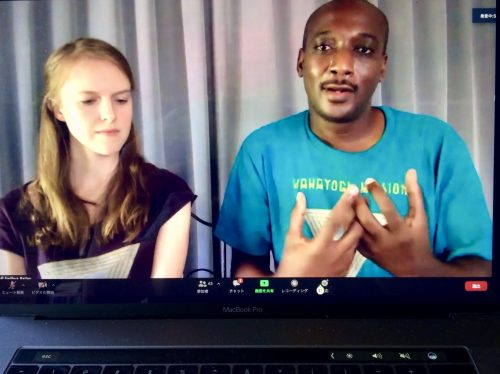
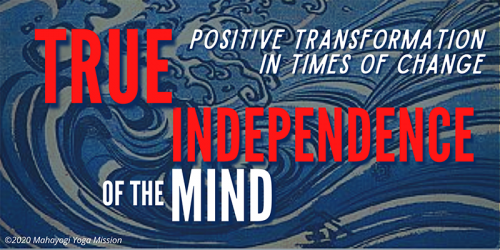 This Friday August 14th, 7 – 8pm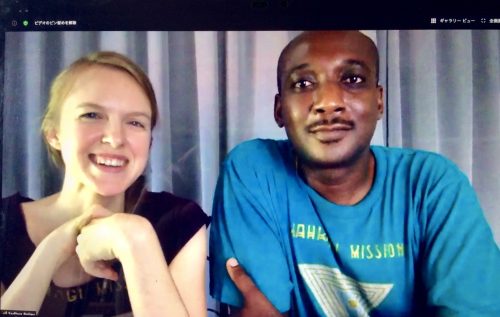


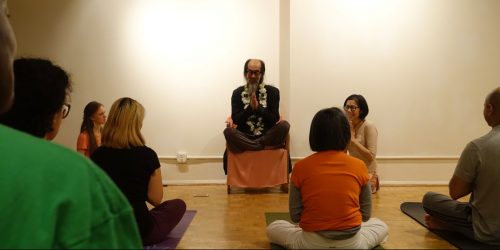 Pranam to our Beloved Master, Shri Mahayogi.
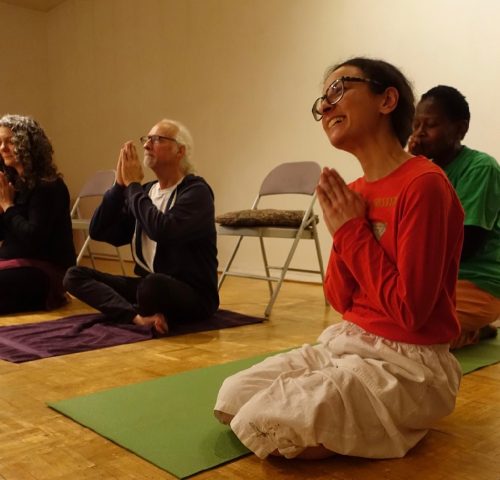 the four Satsangha that were offered, many people were drawn to be at the side of the Master. Some came to meet Shri Mahayogi for the first time, some who met Shri Mahayogi during the past visit attended regularly, and there were even some faces that gratefully appeared after many years of absence. A steady stream of practitioners from Japan
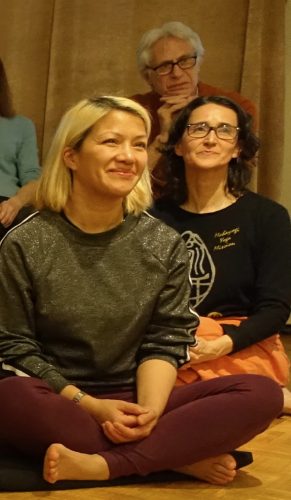 also made the trip across the world to spend concentrated time of learning with Shri Mahayogi in New York. Whether new or old, whether from the United States, from Europe, or from various parts of Asia, Shri Mahayogi graciously and warmly welcomed all to his side.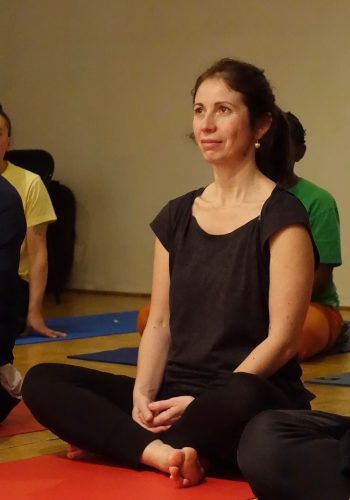
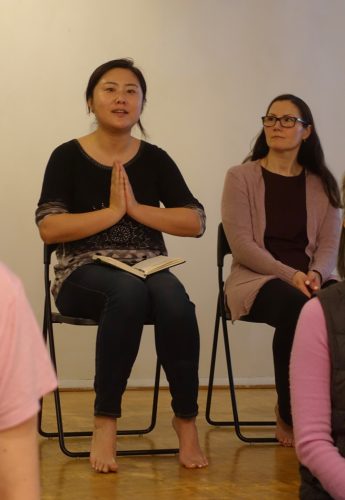 remains so unchanged. ”Many who experienced Shri Mahayogi for the first time either expressed the deep quietude or joy they felt within themselves afterward or departed from the programs with faces smiling and shining.
 Again and again, attendees expressed that they had never experienced anything quite like this before,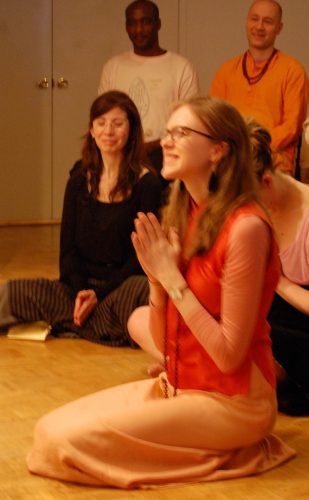
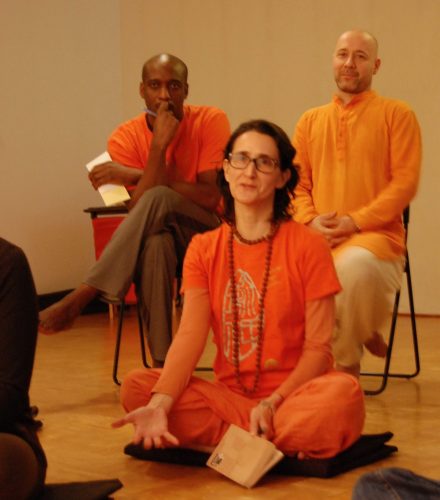 whether in reference to the experience of practicing asana, to the experience of gathering with Shri Mahayogi to ask questions, or, what was probably most impactful and felt most strongly, the experience of Shri Mahayogi himself.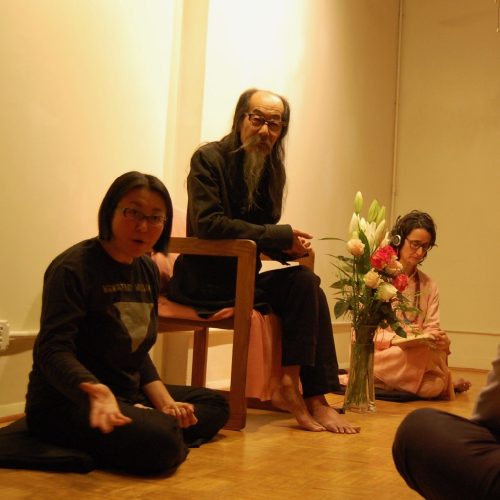
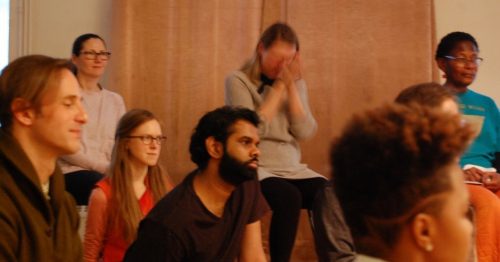
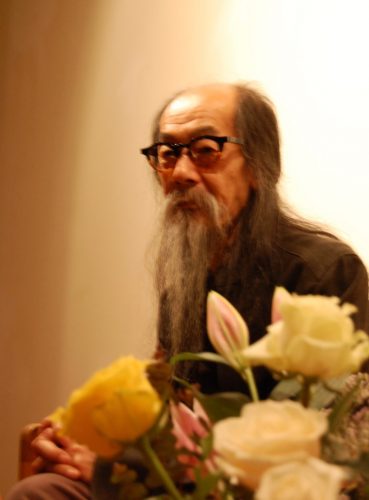
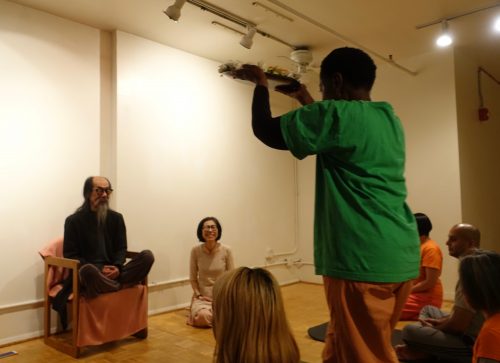
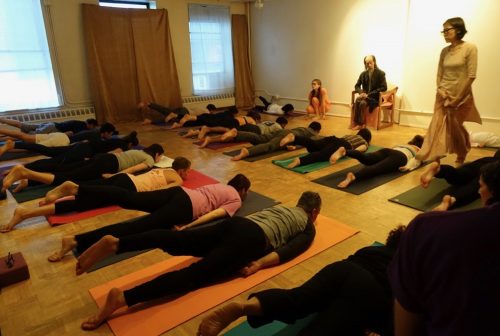 in which attendees gathered to practice asana and meditation under the guidance of the Master. In silence, Shri Mahayogi tenderly and with great care and attention watched over all the practitioners in the program, guiding and bringing all to align their minds and hearts with Yoga, and by the end of each class, the space and everything in and around it would become palpably quiet, still, and filled with peacefulness.
 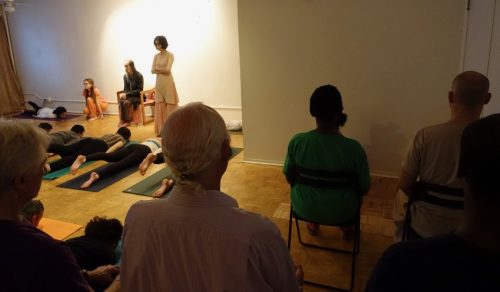 And there were also times in which Shri Mahayogi pulled together new attendees at the end and offered to answer their questions. In these intimate moments, Shri Mahayogi generously and compassionately transmitted the teaching of Truth, which seemed to calm the tears that some shed as they described their life struggle, while bringing joyous exchanges of
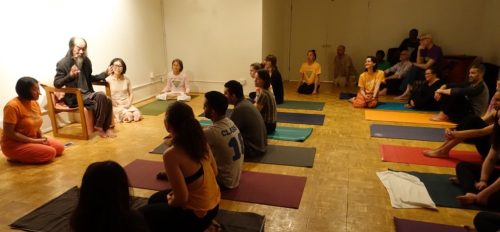 laughter with others.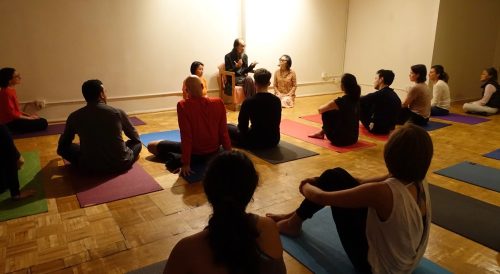
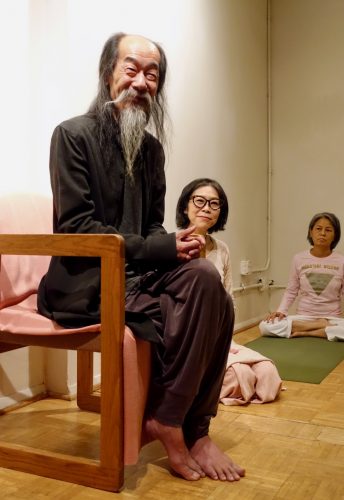 No one can deny that much has transpired since Shri Mahayogi’s return to Japan, both in New York and around the world, and for many, the past three months have brought significant changes and ample uncertainty. Yet, the great gift of Shri Mahayogi’s presence and this unparalleled opportunity we have had in New York to spend time learning from the Master continues to reverberate strongly in our hearts, and the teachings that come from these concentrated times with Shri Mahayogi can provide sustenance and inspiration not only to those who experienced them first hand, but even to those who read or come to hear about them now and later on.